AI in Football: Myth vs. Reality
Football has always innovated. Why does it scare us now?
When the first coach used a whiteboard to draw up tactical movements, someone probably thought he was moving
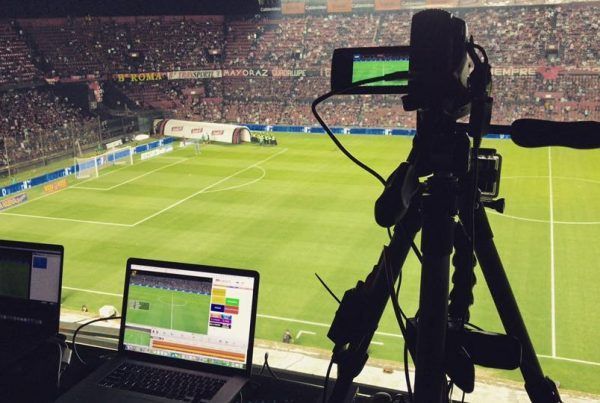
away from the essence of the game. When the first cameras appeared to analyse matches, some said football
was becoming dehumanised. Today, no one can conceive of a professional coaching staff without a video
analysis department, GPS sensors or data platforms.
Artificial intelligence is simply the next step in that natural evolution. And like everything new, it
generates noise before it generates understanding.
What technology actually does in a modern coaching staff
Let’s talk with facts, not headlines.
A professional coaching staff in 2026 uses technological tools for:
- Video analysis: Platforms like Hudl, Wyscout or InStat allow hundreds of matches to be
dissected in minutes, identifying the opponent’s tactical patterns, set-piece tendencies or defensive
vulnerability zones. What used to take days of manual work is now processed in hours. - Physical tracking: GPS sensors integrated into training vests measure workload,
high-intensity metres covered, accelerations and decelerations. This data is essential for injury
prevention and optimising physical preparation. - Advanced scouting: Performance databases allow filtering players by specific
parameters. Not to automatically choose signings — that would be absurd — but to narrow down the pool of
candidates before the human eye and sporting judgement make the final decision. - Communication and organisation: Translation tools, travel planning, session
coordination. The logistics of a professional team are enormously complex, especially in international
contexts where multiple languages are managed.
The key is simple: technology informs, the coach decides.
The myth of the coach who “delegates” to the machine
There is an emerging narrative suggesting that using digital tools equates to losing control of decisions.
It’s an argument that confuses the tool with the operator.
A surgeon uses robotic technology to operate with greater precision. No one says “the robot operated on the
patient.” An architect uses three-dimensional design software. No one says “the computer designed the
building.”
Why do we apply a different standard to football?
The decision of who plays, in which position, with which tactical system, when to make a substitution or how
to motivate a player before a decisive match are profoundly human decisions. They require experience,
intuition, emotional reading of the dressing room and knowledge accumulated over thousands of hours on the
pitch.
No tool replaces that. None.
My relationship with technology
Throughout my career, I have been an advocate for innovation applied to football. I was one of the first
video analysts in Spanish football in the early 2000s, when digital scouting was practically non-existent in
our country. Today, that role is indispensable at any professional club.
I use technology because I believe that anything that makes me more efficient in my work allows me to
dedicate more time to what truly matters: people. The less time I spend on logistics and data processing,
the more time I have to talk to a player, prepare a team talk or analyse an opponent in depth.
Technology gives me information. I give it judgement.
The real debate
The debate shouldn’t be whether coaches use technology — the answer is obvious: yes, all of us — but how we
integrate it with respect for the human factor.
Football is a sport of people. Of emotions, dressing rooms, leadership, ego management and moments of
pressure where no algorithm can replace looking a player directly in the eye.
But denying the usefulness of modern tools is not defending the essence of football. It’s defending the past
out of nostalgia.
The coaches of the future — and some of the present — will be professionals who combine the analytical with
the emotional, the technological with the human, data with intuition. Not because a trend dictates it, but
because the complexity of modern football demands it.
Conclusion
Artificial intelligence doesn’t coach teams. It doesn’t give dressing room talks. It doesn’t look a player in
the eye to tell him it believes in him.
But it can help a coaching staff work with more data, more speed and more precision.
And that, far from being a problem, is an opportunity to do our job better. As it has always been with every
innovation that football has adopted throughout its history.
Fear of the new generates headlines. Understanding the new generates progress.